Spain
Since March 7, 2024
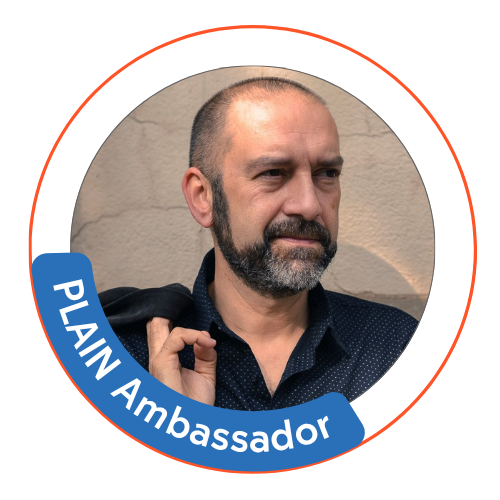
PLAIN Ambassador
Antonio Martin
What first inspired you to get involved with plain language?
I joined the plain language movement because I have always tried to understand what constitutes an error so that I can avoid it before it occurs. This comes from my experience as a proofreader, editor, teacher and communicator. No one should be left out. Thanks to PLAIN, I realised I wasn’t the only one who thought that complicated texts are an artificial and unnecessary barrier, not a sign of rigour. Throughout my work with legal and administrative documents, I’ve seen that many people are left out simply because they don’t understand what they’re reading. Clear language does not simplify reality: it makes it accessible. For me, it is a matter of empathy, efficiency and also public responsibility. It is we, the citizens, who build and form part of a state: it is inconceivable that we should consent to being left on the sidelines. Empathy in communication means guaranteeing rights, improving processes and building trust in institutions, companies and organisations.
How did you become a plain language ambassador?
To be honest, I didn’t know I could be an ambassador! I think they did an experiment on me. I hope I’ve done well as a test subject!
But I did think that representing PLAIN allowed me, on the one hand, to have my own voice and to show the authority our association holds; on the other hand, PLAIN’s authority allows you to open doors to raise awareness of plain language. That’s why I was determined to implement a top-down approach: from the main state organisations right down to the smallest ones. Furthermore, as ambassadors, we must be the link between the association and the real world: together, all the ambassadors can show a more realistic picture of where we are, where we’re heading, and where we could end up.
Why is plain language important to you personally or professionally?
Plain language is the catalyst for democracy: it is what makes accessibility and transparency a reality. It is pure justice. And for the complex machinery of an organisation (whether public or private), it is the lubricant that keeps it running smoothly, efficiently and without any parts burning out — we all know far too many people who have burnt out at work. The main problems always stem from a breakdown in communication. Clear language means putting yourself in the other person’s shoes so that you can understand them, ensuring your communication is fluid and effective. I love helping to make that happen.
Can you describe a project where plain language made a real difference?
Absolutely! I don’t have the track record of Joseph Kimble, but I know we’ve managed to change the lives of many people. Not just those who’ve told us their workload has been reduced by up to 80%, but also the most vulnerable people who’ve been able to access the resources they were entitled to but didn’t know about. The work we’ve done with Madrid City Council, the Valencian Regional Government, the electricity company Endesa and the financial institution BBVA is what I’m most proud of. And above all, we have produced a plain-language version of the Spanish Constitution.
What’s your process for simplifying a complex text?
I always think things through and ask questions before doing anything. I try to delve deeper into what seems most obvious, like a scientist. I need to know what it is that really needs to be conveyed, how it will benefit the person receiving it, what it might entail, and what consequences and follow-up actions their decision will lead to, as well as what they will need to achieve it. Of course, I put this into context to understand the situation in which this information is received, whether it will be necessary or merely informative, whether the person might be anxious or worried, and what they know about the whole procedure. That is why I place great emphasis on restructuring the entire document based on what the person who is going to read, see or hear it needs to know. If we can also help with the design, so much the better, because I am a proponent of ‘textappeal’ rather than legal design.
About Antonio
BA in Hispanic Philology from the University of Complutense Madrid (UCM). Lecturer, communicator and journalist: CEO of the consultancy firm CÁLAMO&CRAN since 1997, and Plain Language conferences EnClaro. Co-founder of the professional associations UniCo and SEA. He co-edits the weekly newsletter Radar del lenguaje claro in Spanish. Member of the editorial board of the linguistic journal Archiletras. PLAIN Ambassador in Spain. Author of several books on plain language and advocate for a clear Spanish Constitution. He is a passionate and entertaining teacher, an enthusiastic communicator of language.
Antonio’s work with PLAIN
- Raised awareness of PLAIN and plain language within Spain’s administrative bodies.
- Made PLAIN one of the six associations representing civil society in the Congress of Deputies’ Open Parliament Plan.
- Coordinated actions with representatives from Clarity, IPLF, and ASEPAU to address regulations that run counter to plain language through Spanish politicians.
- Participated in national and international conferences and meetings, raising awareness of what PLAIN does and what has been achieved in Spain.
- Fostered contacts between PLAIN and DirCom, Political Watch, OEI (Organisation of Ibero-American States), and other bodies.
- Nominated PLAIN as a candidate for national awards, including those from the magazine Archiletras.
- Led the Clear Constitution project under the auspices of PLAIN.
- Promoted PLAIN in every course, talk, and conference in which he has participated.
- Contributed to working proposals put forward by Spanish-speaking ambassadors.