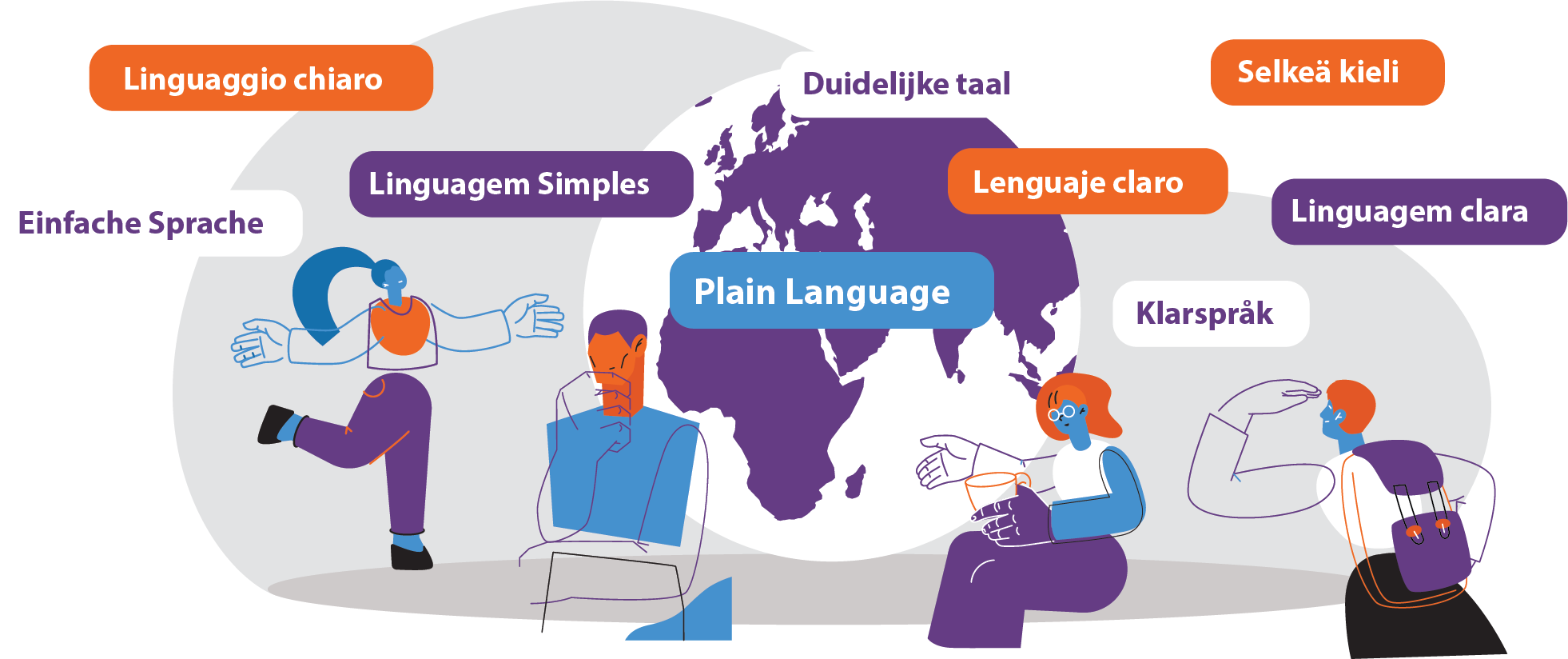

When drafting a plain language text, there are 5 general areas to consider:
- 1Audience and Purpose
- 2Structure
- 3Design
- 4Expression
- 5Evaluation
02 Structure
To select the right structure for a communication, ask yourself:
• What are the common structures used for this type of communication?
• What structures will readers be familiar with?
• What sequence will be logical and easy for readers to navigate?
For example, a procedure may be best organized in a chronological order, while a longer report may have a series of topic-based chapters.
Apply these principles to refine your structure:
• Use summaries to present key information before the details
• Divide each section into roughly equal chunks
• Consider some transitional text to link one section to the next
05 Evaluation
Always evaluate whether your text is likely to succeed before you send it.
At a simple level, this may involve editing the communication against a checklist or standard (for example, ISO 24495-1:2023 Plain language — Part 1: Governing principles and guidelines) or having another person review it.
Wherever possible, carry out some user testing with your audience. This might be through surveys, interviews, or testing with people who represent your readers.
User testing may not always be necessary or cost-effective, such as with an internal email. But it becomes more important for a document that has a wider audience, like a website or user manual.