Plain language and the challenges of COVID-19
Neil James and Hannah Sapunor-Davis
Editors, PLAIN eJournal
2020 has been a year like no other in our lifetimes. The worldwide spread of COVID-19 has threatened human health and fundamentally changed the way we live and work.
This issue of the PLAIN journal looks at the role that plain language has played during the crisis. We have gathered 10 articles from 9 countries right around the globe.
The articles reflect the global situation as it was from January to September 2020. There have been many changes, developments, and even setbacks since then. Nevertheless, the perspectives and efforts in this journal remain relevant today.
Plain language is crucial
The first theme to emerge from this issue is that plain language is more vital than ever. As Lodewijk van Noort explains: “In a crisis, there is a great temptation to develop communications quickly, based on professional knowledge and experience.” Yet in times of crisis, it is even more important to develop communciations with citizens because they are the “real experts”. Lodewijk discusses the reflective communication model used at the Municipality of The Hague.
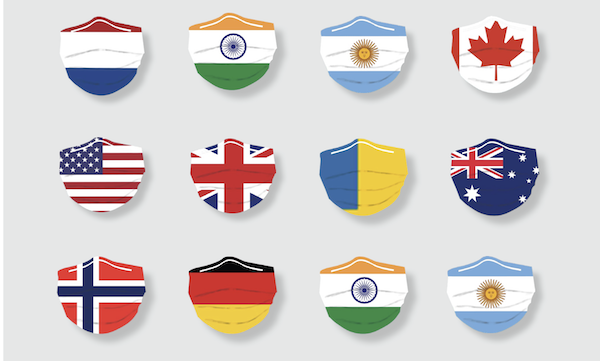
Another good example comes from Argentina, where Roxana Venútolo outlines how the national government succeeded in communicating with its citizens about the use of face masks. In the process, it preserved an adequate supply of personal protective equipment for frontline healthcare workers.
By contrast, Vijayalaxmi Hegde sets out 6 ways that the government of India could have communicated more effectively with its citizens. This includes choosing terms carefully, using plain language, fighting misinformation, and localizing the message.
Some communities are vulnerable
Our issue also highlights how governments have fallen short in communicating with some of their more vulnerable citizens. Understanding COVID-19 was difficult enough for most of us, but for those without the literacy skills to manage a range of day-to-day reading tasks, it presented further risks.
Three pieces from Sweden, Germany, and Australia highlight that for some people, plain language is simply not enough. We also need to provide easy-to-read communications. The community sector in many countries had to fill this gap and develop some of the necessary resources.
The contributions in this issue from Cathy Basterfield, Amalthea Frantz, and Simone Fass and Anne Leichtfuß highlight how governments need to learn some hard lessons from this pandemic.
The new normal continues
While many of the case studies in this issue recount what happened during the early outbreak of the pandemic, others consider the continuing place of clear communication as the world adjusts to its new normal.
Kim Palfenier outlines how Canadian community sporting organizations were affected by COVID-19 and how communications was included as one of the “essential areas” in a Return to Play Roadmap and in guidelines for the safe return to playing sport.
Valerie Watson reflects on the impact that COVID-19 had on her burgeoning plain language business in California, and how she has adapted to survive the pandemic.
In the face of much public disinformation, immunologist professor John Dwyer and medical editor Dr Peter Arnold have been developing plain language communications to make the complex science of corona viruses more accessible. For this issue, they have developed a short plain language guide that captures what we currently do (and do not) know.
Something to celebrate
While 2020 presented plenty to challenge us, it also offered something for the plain language community to celebrate – the publication of the fifth edition of Martin Cutts’s Oxford Guide to Plain English.
First published in 1996, Martin’s book is a standard reference on plain English, and it has been an inspiration to many. PLAIN decided to celebrate by interviewing Martin about the milestone.
The longevity and success of Martin’s work are a useful reminder that despite the challenges we face, plain language will continue to evolve and to influence the world for the better.
We would like to thank all of the contributors in the issue, whose efforts in turn represent just a fraction of the excellent work the plain language community is doing to help the world overcome the challenges of COVID-19.