New networks for the next generation
Dr. Neil James
Plain English Foundation
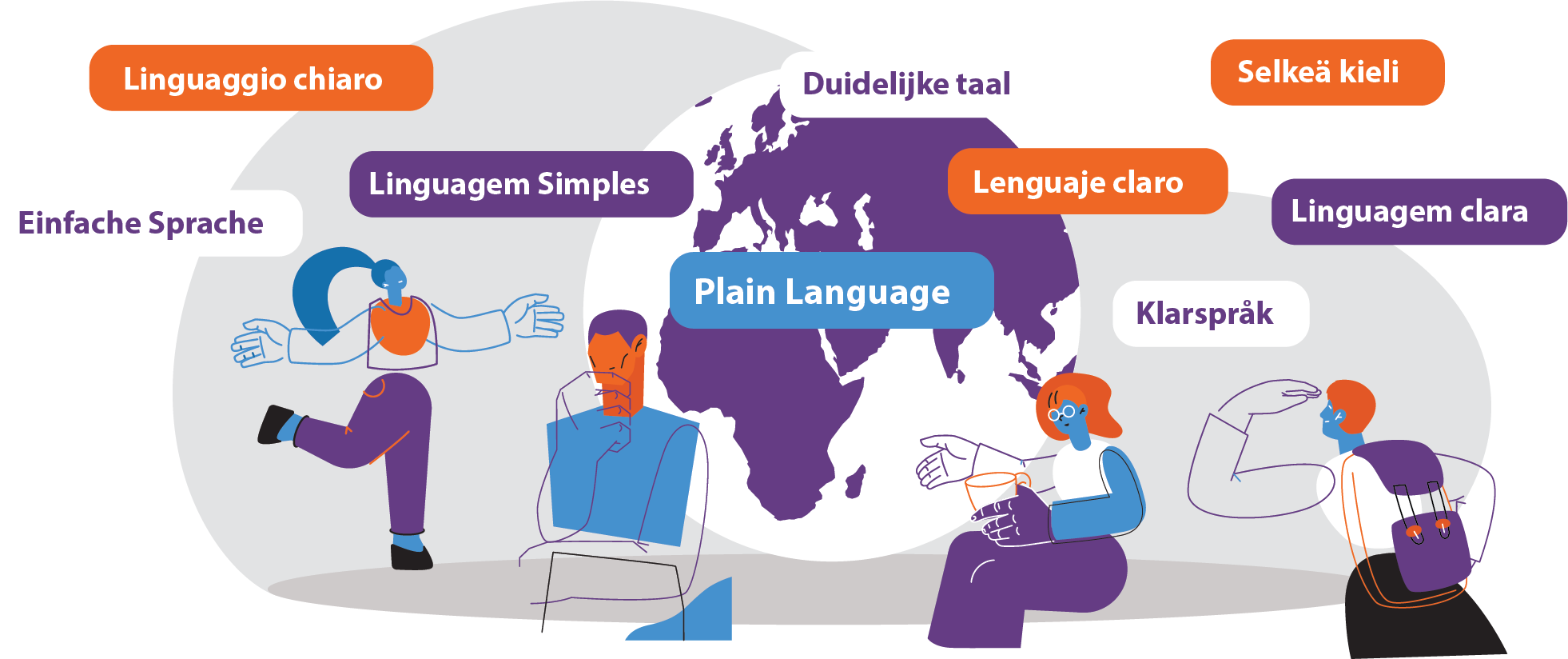
In 1993, when 2 Canadians founded the professional network that became PLAIN, its first members were mostly from English speaking North America. Twenty-five years later, PLAIN now has members from over 30 countries working in some 15 languages.
Much has progressed in those 25 years. Plain language has become increasingly mainstream in many countries, and new countries and languages embrace clearer communication every year. And by learning from the previous generation, some have achieved in just a few years what took decades elsewhere.
For example, the September 2019 PLAIN conference in Oslo will highlight how Norway has gone from a plain language newcomer to a world leader in less than a decade.
This first issue of PLAIN’s e-journal highlights the next generation to join our growing network: 6 more countries setting out on the plain language journey. So sit back, buckle up, and get ready for a flight right around the plain language globe.
Simple and complex
Our journey starts in Hungary, where in 2014 Vera Gergely started a one-woman band at a time when “nobody had heard of plain language”. Exactly how does one person reform the communications of an entire language and country? You start a blog, of course, and publicly share your journey as you learn.
Still in Europe, we find the situation is more complex in Germany, where Beate Wiegard surveys current efforts to improve clarity. She outlines exciting developments in the government, health, and legal sectors, and how the university sector is getting involved.
Of particular interest in Beate’s article is the debate over the differences between “einfache Sprache” (plain language) and “Leichte Sprache”
(easy-to-read) German, which in some respects are competing for focus.
Hopping back on our plane, we travel east to Japan, where the concept of plain language is largely unknown. But in a shrinking economy and a globalized environment, it is the push for clearer English rather than plain Japanese that is creating the first “ripple effect” towards plain language.
Machiko Asai and Sarah Ingmanson Battaglia outline how a new consortium is about to launch in Japan and raise awareness of the benefits of clearer communication.
The new networks
The final leg of our journey takes us to South America, where some of the most exciting developments have been happening in the plain language world. These center around some powerful new networks.
Chile has been the leader. Christian Anker and Maximiliano Nuñez of the Transparency Council outline the plain language network of 7 major public institutions in that country, and how they have hosted events, provided training, and promoted plain language. PLAIN was pleased to support the Chilean network’s first international seminar in Santiago in July 2018.
Based on the Chilean model, Argentina has set up its own network in quick time, with a wonderful model for guiding institutions through the plain language process. Mariana Bozetti is the coordinator of its technical committee and takes us through how they will work.
Our journey ends in Colombia, where Betsy Perafán Liévano and Germán Jair Arenas Arias discuss the new plain language bill and manual that are helping institutions communicate more effectively with their citizens. The university sector is getting involved, and a Colombian network was launched in October 2018 to create a plain language culture that “puts citizens at the center”.
Our international impact
These stories suggest plain language is poised to reach a critical mass of countries globally in the decades ahead. Each country that sets out on that journey draws on the work of previous generations, but is adapting that experience to its own language and institutions.
Despite this diversity, the plain language message is as clear in South America as it is in Central Europe or East Asia.
So it seems fitting that PLAIN is launching its new journal at this time – and in our 25th year – with a multilingual issue in 5 languages: English, Hungarian, German, Japanese, and Spanish. Our thanks go to all those who helped the authors with translations to and from English: Janine Schaller-Boyum, Torunn Reksten, Masumi Kitsukawa, Joanna Richardson, and Emilia Ghelfi.
The journal will continue to provide short, informative articles about plain language around the world to inspire and inform our members. In this way, PLAIN continues to fulfill its own vision as a network of practitioners supporting each other and promoting plain language.
If there is one thing our history has taught us, it is that a handful of individuals can have a significant impact in changing the way their institutions, their countries, and even their languages communicate. But that impact is even greater when we connect through networks such as PLAIN and those now being established by the next generation.