PLAIN Ambassadors
Virginia St-Denis Managing Editor
The Canadian Oxford Dictionary, 2nd edition, defines ambassador as:
- an accredited diplomat sent by a state on a mission to, or as its permanent representative in, a foreign country.
- a representative or promoter of a specified thing: an ambassador of peace.
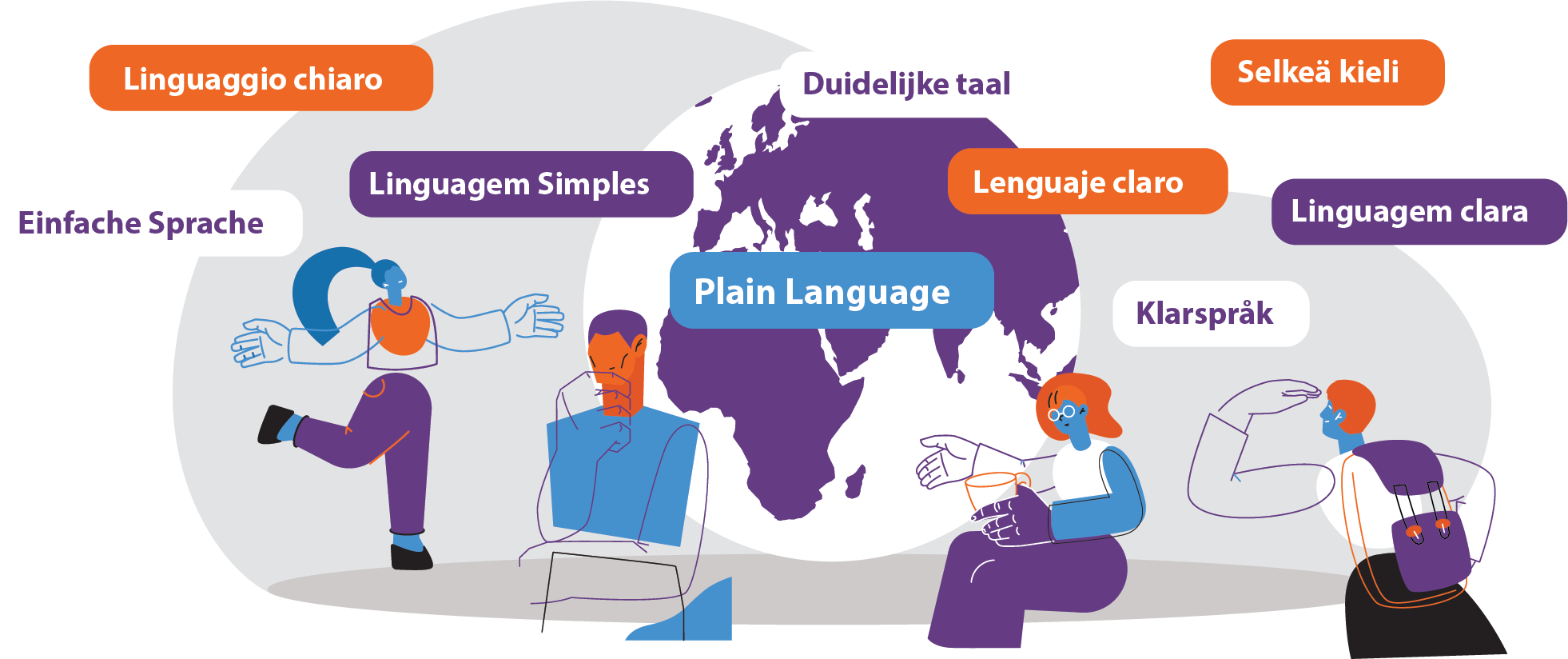
With members coming from 52 countries around the world and speaking 21 languages, it is no wonder that the Plain Language Association International (PLAIN) needs an ambassador program. In fact, more than half of the members come from non-English–speaking countries, so we need ambassadors who speak our members’ languages.
Started about six years ago, the program now has 21 ambassadors. They not only promote plain language and PLAIN in their various regions and languages, but they also provide local perspectives to international discussions at PLAIN.
This issue of the PLAIN eJournal shares stories from many of these ambassadors, covering activities happening around the globe in many languages. Not really knowing how best to organize this issue, I decided to present them alphabetically.
Together, these contributions show how plain language is taking root in different cultural, linguistic, and political contexts. Although each ambassador’s experience is unique, common themes emerge: advocacy, education, collaboration, and a commitment to making communication clearer.
We start in Argentina where Valeria Colella discusses plain language, artificial intelligence, and the right to understand in Latin America and in Rioplatense Spanish.
Tamar Tal-Amatzia then shares the need for plain language in Israel. While some of that need resembles that of other countries (e.g., health care, public forms, service websites), some of it does not. “When [early warning air raid] sirens sound, instructions must be short, clear, direct, and easy to act on.”
In Italy, Lorenzo Carpanè discusses building a figurative embassy by increasing PLAIN’s members, establishing an Italian group of PLAIN, promoting PLAIN, and spreading the social, ethical, and pragmatic importance of using plain Italian.
Then we travel to South Africa where Antoinique van Staden presented a webinar hosted by Nadja Green, focusing on websites and how plain language principles can improve user experience, even when a redesign is not possible. They are one of the groups that offers a LinkedIn page, where plain language professionals in South Africa can connect, share, and grow.
Antonio Martín wants PLAIN to stop being seen in Spain as an international — essentially Anglo-Saxon — association that is out of touch with Spain and with Spanish and Catalan. He discusses his plan to establish a PLAIN group in Spain.
Wondering what it’s like to become an ambassador? Sarah Jordan shares her story about why she became the ambassador in Switzerland, the transition she has made, and her very active 5 months as ambassador.
Jamila Savoy became the PLAIN ambassador in Australia in March. She shares a brief description of her plans for plain language legislation.
The PLAIN ambassador in Belgium since November 2025, Wout Huygens teaches high school students that plain language is the key to inclusion. It’s part of a workshop that he gives in both Dutch and French.
Also last November, Sean Driver and the National Adult Literacy Agency (NALA) became the ambassador in Ireland. Together, they are halfway through the 10-year national strategy Adult Literacy for Life and continue their training on the ISO plain language standard.
In her third year as the PLAIN ambassador in India, Vijayalaxmi Hegde says it has been an uphill battle and an exciting opportunity.
I hope the activities in these articles and briefs inspire you, our readers, with the variety of possible things you can do in your region or even become an ambassador.